
Time-sensitive moves,
dispatched automatically.
The Autonomous Dispatch engine continuously scans active routes across the system and posts them to the Fleet Driver Board using operational criteria, prioritizing time-sensitive moves to reduce storage and per diem costs, improve on-time performance, and maximize fleet utilization.
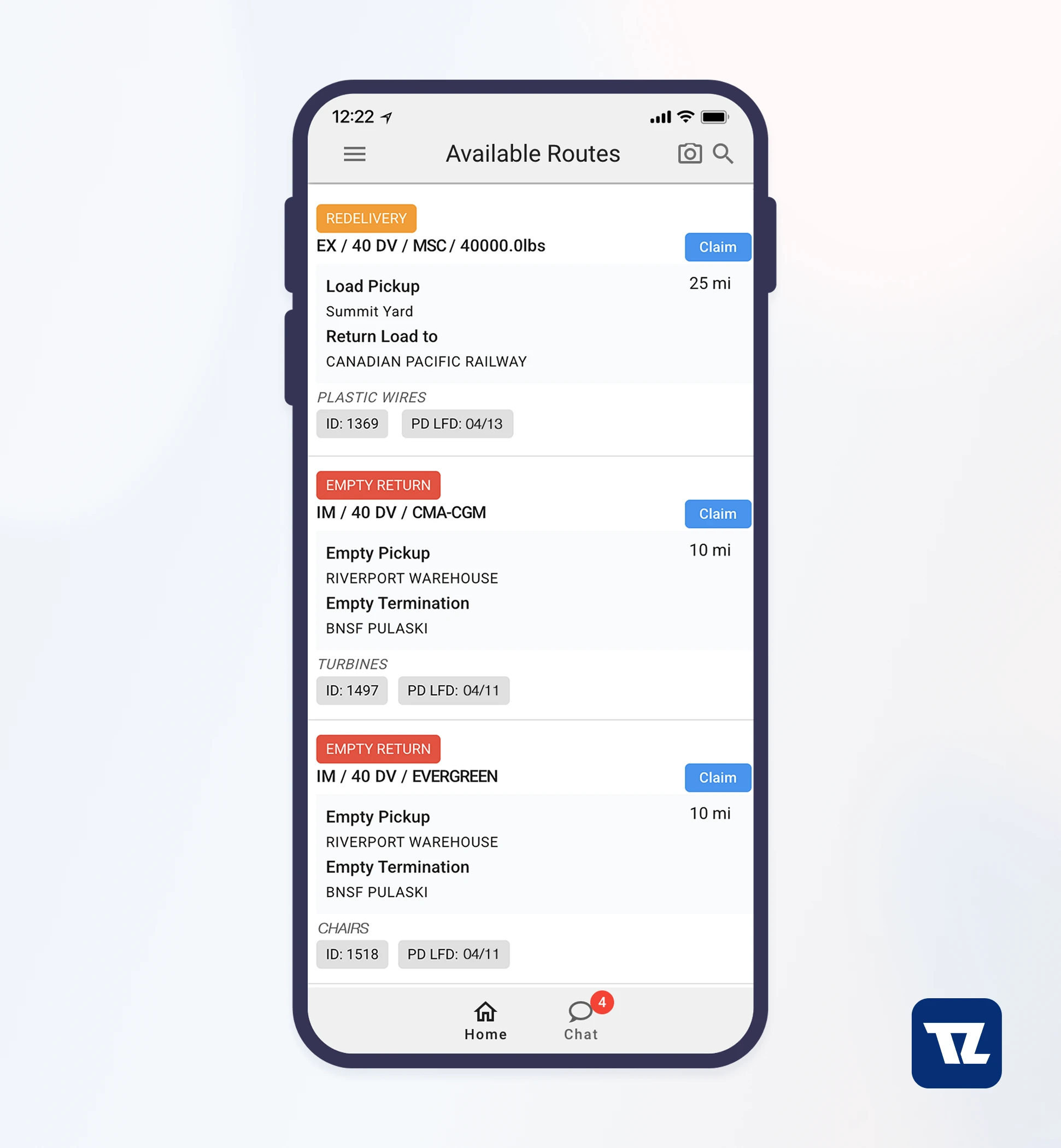
It watches every active route.
- Pre-Pull
- Delivery
- Empty Return
- Redelivery
As routes become available for dispatch, the Autonomous Dispatch engine intelligently posts them to the Fleet Driver Board using operational criteria such as:
- Per diem deadlines
- Last Free Days (LFDs)
- Terminal cut-off dates
- Cargo appointment times
This automated process prioritizes time-sensitive moves, helping carriers reduce storage and per diem costs, improve on-time performance, and maximize fleet utilization.
Routes go to reliable drivers first.
Available routes are distributed based on each driver's performance score. Drivers are divided into two performance groups.
Receives immediate notifications when new routes become available, providing first access to available work.
Receives notifications one hour later if the route remains unclaimed.
This performance-based allocation rewards reliable drivers while ensuring all available routes are ultimately offered to the entire fleet if they are not accepted promptly.
An Affinity Score for every eligible driver.
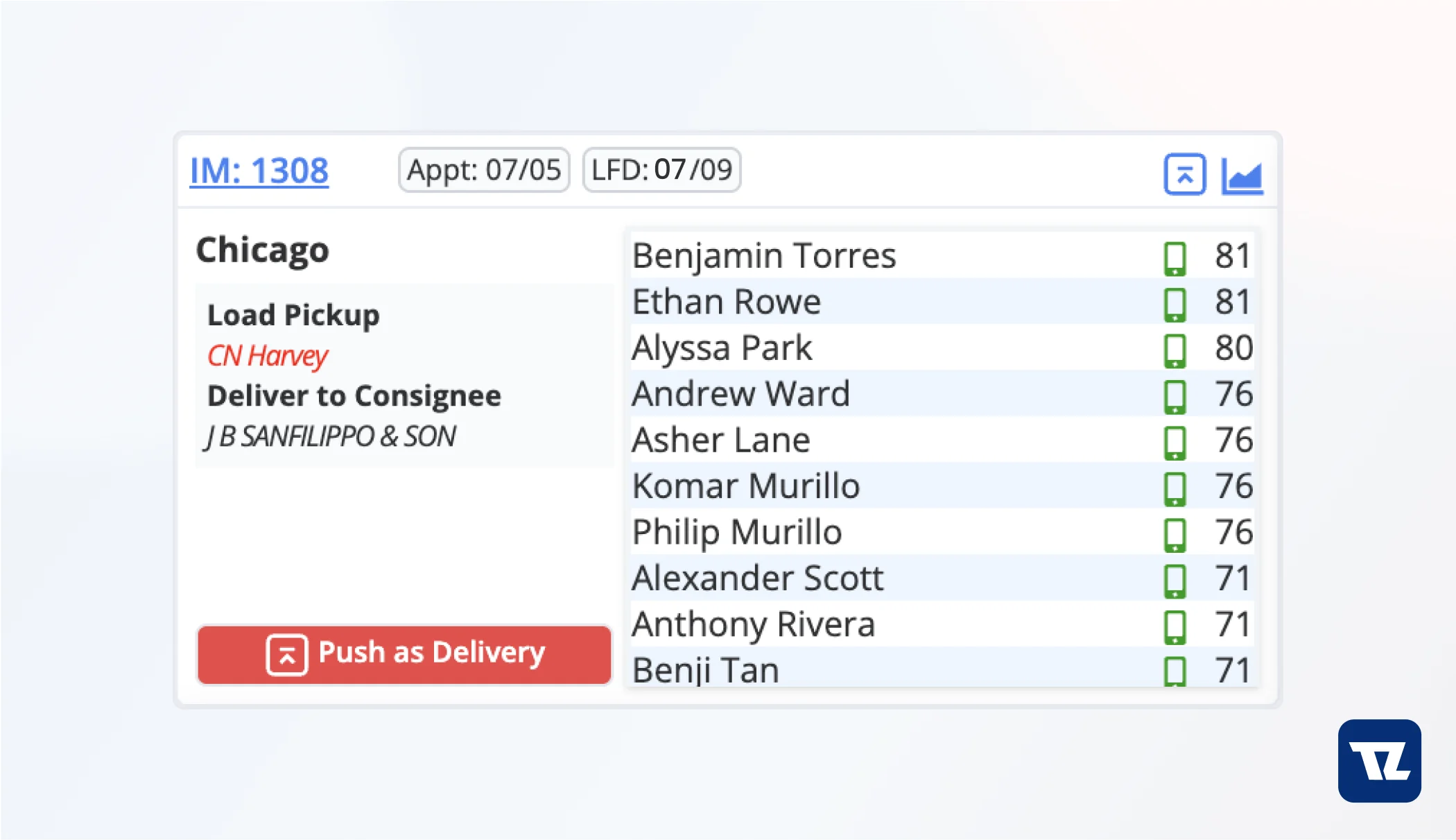
When a route becomes available, the system does not simply assign it to the closest driver. Instead, it calculates an Affinity Score for every eligible driver by evaluating multiple factors designed to maximize both fairness and operational efficiency.
- 1
Seven-Day Earnings Rotation
Drivers are first ranked by their total earnings over the previous seven days. This creates a fair work rotation by giving higher priority to drivers who have earned less, ensuring that drivers who had fewer work opportunities receive priority when new loads become available.
- 2
Six-Month Performance History
The system then evaluates each driver's performance over the previous six months, considering factors such as work availability and completed assignments, cancelled appointments, USDOT roadside inspection points, and Terminal Preference Match.
- 3
Trip Length Compatibility
The system compares the mileage of the available route with each driver's historical average trip distance. This helps match local drivers with local work while assigning longer regional moves to drivers who routinely perform them.
Dynamic Payable Prepull Fee
When the system detects an imbalance between loads with imminent Last Free Day (LFD) or Cut Off Dates (CO) deadlines and available drivers, it automatically converts eligible delivery routes into pre-pull moves. Based on the severity of the imbalance, the system posts these pre-pull opportunities to the internal Driver Mobile Board with a dynamically adjusted pre-pull incentive. Administrators configure the minimum and maximum incentive amounts during setup, allowing the system to automatically determine the appropriate fee based on current operational conditions.
Routes go to the highest Affinity Scores.
The Autonomous Dispatch engine combines these factors into a single Affinity Score for every eligible driver. Routes are then offered to the drivers with the highest Affinity Scores, creating an autonomous dispatch process that balances fairness and operational efficiency.